|
 |
Marine compound, way after the curfew, he fired a two-round
burst from his M16, which I then took away from him and, not seeing
anybody around, drove off.
It seems, though, that the sergeant of the guard ran up to the gate and,
apparently, my good sergeant shot him the bird. Col. Ladd got a somewhat
exaggerated account of the incident, through channels, which he then asked
me to explain. My reply was about the best creative writing I have ever
done.
With Delta
in The Field
I had established a precedent for hanging out with
Project Delta, so when they set up an FOB (Forward Operating Base) at Phu
Bai to run a recon of the valley about five kilometers from A Shim, I went
down there to cover it for Green Beret Magazine.
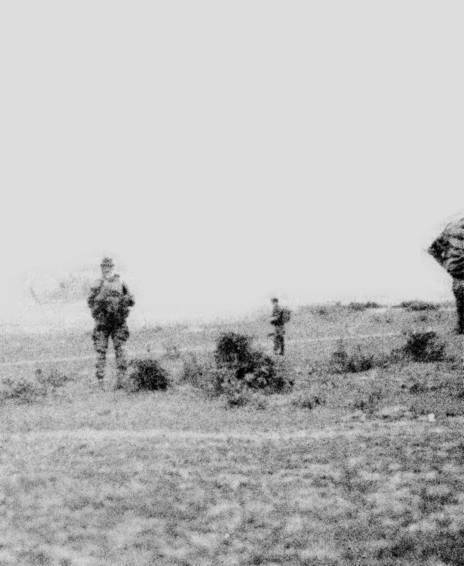
If Delta lived plush in garrison, they lived spartan in the field. The had a number of squad tents set up, a chopper pad beside their
headquarters bunker, a defensive perimeter with some wire and that was it.
I sat around up there for a couple of days waiting for an operation I
could go out on. Allen wouldn't let me go out with a recon team, which was
probably a good
ABOUT THE AUTHOR
Jim Morris tells a good war story, as Part 1 of
his 'three-part article on the Delta Project shows and War Story is the
title of his book about his three tours in Vietnam with the U.S. Army
Special Forces.
After receiving a disability retirement from the Army, Morris attended
the University of Oklahoma's graduate program in professional writing. He
is now a graduate student at a mid-western university. He holds the Bronze
Star with three oak-leaf clusters, two for valor; the Purple Heart with
three oak-leaf clusters; the Vietnamese Cross of Gallantry, with Bronze
Star; the Combat Infantryman's Badge; and the Master Parachutist Badge.
Morris's SOF articles include "The Straphangers War" (February '79) and "Dumbo
Drop" (March '80). SOF plans to publish his three-part interview with Mike
Force Company Commander Larry Dring a saga that tells some of the best
war stories I've ever read after the publication of "Death-Dealing
Project Delta."
M.L. Jones
|
|
had been down there all the time I was in-country, but he
was in an important command position, and as PIO (Public Information
Officer) I was kind of embarrassed to go down there and hang around with
all those real soldiers when I was flying my desk up in headquarters. But
sometime during Tet when I had to go there on business, Allen or somebody
asked me back socially and I started going to their club every now and
again.
So when Lang Vei was overrun, and Chuck Allen called and told me Project
Delta was going to jump in and take the place back, I grabbed my field
gear
and a volunteer photographer and away we went.
When we got to Da Nang, which was to have been the staging area for the
jump, we found the NVA had withdrawn and the survivors were being brought
in by chopper. It had been a hell of a fight, the NVA using tanks for the
first time in the war, and they had overrun the place finally with just a
few Americans and Viets holding them off from the command bunker (See
"Armor in the Wire!" SOF, November '79).
I Corps was run by the Marines at that time, and I got to a Marine PIO
colonel and suggested that we hold a press con-
ference for those Lang Vei survivors who wanted to
appear. Four of them |
came over to the press camp and were interviewed by all
three TV networks and the wire services and news magazines. I wasn't too
happy about their being scrubbed and put into baggy fatigues with the
supply room smell still on them. I'd have been happier to have them in
tiger suits and bandages.
There was no question about it. We had the shit kicked out of us at Lang
Vei, but those guys were so cool at their press conference, and it was
obvious they had fought so bravely when badly outnumbered, that I like to
think we turned our military defeat into a psychological victory. Our own
little Tet Offensive within a Tet Offensive.
After the press conference, the guys from Lang Vei were whisked back to
the SF headquarters in Da Nang and my sergeant photographer and I got good
and drunk with the correspondents. It was a good time. Somebody played the
guitar and I croaked out the Viet Cong Blues and the Jungle Rot Blues in
my wretched baritone. Other songs were sung and some jokes were told and
we all agreed that nobody in any position of authority knew what the hell
was coming off.
My good sergeant got a great' deal drunker than I did, since all he was
doing was getting drunk, while I was cleverly cementing relations with my
journalistic colleagues. As we drove away
from the |