|
 |
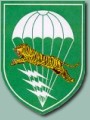
Formation of LLDB
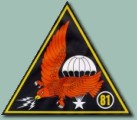
and 81st Ranger Bn. |
 |
In early 1956 the French built Commando School at Nha Trang was
re-established with US military assistance to provide physical training
and ranger instruction for up to 100 students. Early the following year
President Ngo Dinh Diem ordered the creation of a special unit to conduct
clandestine external operations. Initial parachute and communication
training for 70 officers and sergeants was conducted at Vung Tau; 58 of
these later underwent a four month commando course at Nha Trang under the
auspices of a US Army Special Forces Mobile Training Team. Upon
completion, they formed the Lien Doi Quang Sat so 1 (First Observation
Unit) on November 1957 at Nha Trang. The unit was put under the
Presidential Liaison Office, a special intelligence bureau controlled by
President Diem and outside the normal ARVN command structure. The
commander was Lt. Col. Le Quang Tung, an ARVN airborne officer and Diem
loyalist. Many of the Unit's members came originally from northern
Vietnam, reflecting its external operations orientation.
In 1958 the Unit was renamed the Lien Doan Quang Sat so 1, or First
Observation Group, reflecting its increase to nearly 400 men in December.
By that time the Group was seen as an anti Communist stay behind force in
the event of a North Vietnamese conventional invasion; however, because of
its privileged position the Group stayed close to Diem and rarely ventured
into the field.
By 1960 it was apparent that the main threat to South Vietnam was growing
Viet Cong insurgency; the Group abandoned its stay behind role and was
assigned missions in VC infested areas. Operations were briefly launched
against VC in the Mekong Delta, and later along the Lao border.
In mid 1961 the Group had 340 men in 20 teams of 15, with plan for
expansion to 805 men. In October the Group began operations into Laos to
reconnoiter North Vietnamese Army logistical corridors into South Vietnam.
In November the Group was renamed Lien Doan 77,or 77 Group, in honor of
its USSF counterparts. Over the next two years members were regularly
inserted into Laos and North Vietnam on harassment and psychological
warfare operations. Longer duration agent missions, involving civilians
dropped into North Vietnam, also came under the Group's auspices.
The Group's sister unit, 31 Group, began forming in February 1963.
Following criticism of 77 Group's perceived role as Diem's 'palace guard',
both groups were incorporated into a new command,, the Luc Luong Dac Biet
(LLDB) or Special Forces, on 15 March 1963.
The LLDB after President Ngo Dinh Diem
In the wake of the coup the Presidential Liaison Office was dissolved and
its function assumed by the ARVN. The LLDB was put under the control of
the Joint General Staff and given the mission of raising paramilitary
border and village defense forces with the USSF. External operations were
given to the newly formed Liaison Service, also under the JGS. The Liaison
Service, commanded by a Colonel, was headquartered in Saigon adjacent to
the JGS. It was divided into Task Force 1, 2 and 3, each initially
composed of only a small cadre of commandos.
In 1964 the JGS also formed the Technical Service (So Ky Thuat), a covert
unit tasked with longer duration agent operations into North Vietnam.
Commanded by a Lieutenant Colonel, the Technical Service comprised Group
11 (Doan 11), oriented toward agent operations in Laos and eastern North
Vietnam; Group 68 (Doan 68 Thang Long), another infiltration unit; and the
Coastal Security Service, a maritime commando group at Da Nang attached to
the Technical service with its own contingent of PT boats for seaborne
infiltration.
The post Diem LLDB was restructured for its proper role as a source of
counter insurgency instructors for paramilitary forces. By February 1964,
31 Group had finished training and was posted to Camp Lam Son south of Nha
Trang. In May the Group became responsible for all LLDB detachments in I
and II Corps. A second reorganization occurred in September when 31 Group
was renamed III Group and given responsibility for the Special Operations
Training Center at Camp Lam Son. Now 77 Group, headquartered at Camp Hung
Vuong in Saigon, became 301 Group. In addition, 91 Airborne Ranger
Battalion, a three company fast reaction para unit, was raised under LLDB
auspices in November. Total LLDB force strength stood at 333 officers,
1270 non commissioned officers and 1270 men. The LLDB command at Nha Trang
was assumed by Brig. Gen. Doan Van Quang in August 1965.
By 1965 the LLDB had become almost a mirror image of the USSF. LLDB
Headquarters at Nha Trang ran the nearby Special Forces Training Center at
Camp Dong Ba Thin. LLDB 'C' Teams, designated A through D Company, were
posted to each of South Vietnam's four Military Regions; each 'C' Team had
three 'B' Teams, which controlled operational detachments at the sub
regional level; 'B' Teams ran 10 to 11 'A' Teams. 'A' Teams were co-located
with USSF 'A' Teams at camps concentrated along the South Vietnamese
border, where they focused on training Civilian Irregular Defense Force (CIDG)
personnel.
In addition, the LLDB Command directly controlled the Delta Operations
Center with its Delta teams and the four company 91 Airborne Ranger
Battalion, both were used by Project Delta, a special reconnaissance unit
of the US Military Assistance Vietnam Studies and Observation Group (MACV-SOG),
which operated deep in VC/NVA sanctuaries.
On 30 January 1968 the Communists launched their TET general offensive
across South Vietnam. Caught celebrating the lunar New Year, the Saigon
government was initially ill prepared to counter the VC/NVA attacks. When
Nha Trang was hit on the first day the LLDB Headquarters was protected by
91 Airborne Ranger Battalion, recently returned from one of its Project
Delta assignments. At only 60 percent strength the Airborne Rangers turned
in an excellent performance, pushing the major Communist elements out of
Nha Trang in less than a day. The battle, however, cost the life of the
battalion commander and wounded the four company commanders.
After a four month retraining in Nha Trang three companies from 91
Airborne Ranger Battalion were brought together with six Delta teams and
renamed 81 Airborne Ranger Battalion. In early June the new battalion
prepared for urban operations in Saigon after a second surge of Communist
attacks pushed government forces out of the capital's northern suburbs.
On 7 June the Airborne Rangers were shuttled into Saigon and began
advancing toward VC held sectors around the Duc Tin Military School. After
a week of bloody street fighting, much of it at night, the Airborne
Rangers pushed the enemy out of the city.
Following the Tet Offensive 81 Airborne Ranger Battalion was increased to
six companies, and continued to be used as the main reaction force for
Project Delta; four companies were normally assigned Delta missions while
two remained in reserve at LLDB Headquarters.
From the book: SPIES AND COMMANDOS, How America Lost the Secret War in
North Vietnam, (Modern War Studies) by Kenneth J. Comboy and Dale Andrade.
81st Ranger Group and
Vietnamese Special Forces Association Website |