|
Alfred Montez
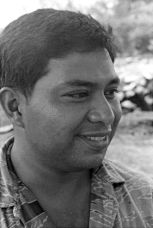
I was
born in Moline, Illinois December of 1944. Grew up in a family with twelve
kids. Grew up poor but healthy, ate a lot of fish, wild game, pinto beans,
rice, and tortillas. Did not eat canned food till I was twelve, it was
peaches and I thought it tasted like shit. My father worked for the Rock
Island Lines and a lumber company.
Growing up Mexican in Illinois in the late forties-early fifties was a
hoot. The nuns treated us like unfortunates, and the white kids beat us up
and called us names. At this time in history few Mexicans lived in the
Midwest, but by the time I turned eighteen the war in Vietnam was starting
to get hot. Like a lot of young American boys, my friends talked a lot
about joining the marines or the army. We all wanted to join together but
the majority wanted the Air Force. The recruiter promised us we would all
stay together at least for the first two years. Ya right!
I ended up in Vietnam May of 1966. All of my friends ended up in Germany
or stayed in America. My training was on KC97 flying tankers and the
incoming KC132. Days before our orders for deployment were printed, half
of my class was told that some of us were going to Vietnam, not as tanker
crews but to maintain the bird dog. We were to be provided with OJT in
country. I was more than pissed when my orders read that I was to report
to a replacement outfit in Saigon. I was given in country orders telling
me to report to 21st TASS, in Nha Trang within two days. So much for
flight pay and travel to the far corners of the world. I ended up staying
in Saigon for more than two days after falling in love with a girl who
loved me too much! No one said anything about me being late, and that
turned out to a valuable lesson learned.
After about thirty days of OJT in Nha Trang, I was sent to three outpost
sites over a period of almost six months. These were the places where I
learned to maintain the little bird without any major depot repair
abilities. Every once in a while an unmarked bird would land most of the
time at night, the pilot and his passenger were always heavily armed,
dirty, unshaven, wore dirty tiger stripes with no rank and offered little
in conversation. They always needed spare parts, oil, and a load of 2.75"
White Phosphorus rockets. After spending two months and twenty days in the
Hospital at Cam Ran Bay in late 1966, I received verbal orders to report
to the TASS instead of going back to my last assigned site.
Again reporting in, Top advised me that in one day a jeep would be at the
orderly room to pick me up for my new assignment. I was re-issued three
pairs of jungle fatigues, two pairs of boots, a flack vest, a hand gun,
and some extra ammo. I already had a rifle issued to me when I got in
country.
The next day a jeep with a heavy-set special forces Sergeant picked me up
and drove me to Delta Project. The driver was the same man who signed me
into the unit. He gave me directions to the medic shack and told me to
give the very gentle E-7 my med records. This was all new to me as I had
always signed into an Air Force units headquarters, here I was signing
into a army unit. Diaz told me to go to S4 and pick up some gear. I went
to my assigned room laid down all I had and went to S4 to get my army
issues. I was met by a shirtless, loud, vulgar talking, blond-haired
Sergeant who made my asshole pucker up. He talked to me as though he knew
me for a long time and disliked me more every time he saw me. He said that
all he gave me would be returned when I left. I got a rucksack, three set
of tigers, a large knife, a machete, web belt and harness, two canteens
and covers, and a couple of bandages, four ammo pouches, poncho and liner,
field sweater and last but not least two floppy hats, with some advice
that ammo and explosives were stacked outside under a overhead covered
slab of concrete.
When I got back to my room with all the army issues I was met by my very
serious looking room mate, who I assumed had dumped all of my of my air
force gear on the floor leaving only the rifle and pistol. Herb gave me a
disgusted look and asked who the fuck was I going to kill with that rifle.
Every place I went in this place people seemed to want to bust my balls. I
finally met another AF person, one LT. Flanagan. Even he seemed to be
growing Army whiskers. Later on I met Capt. Groth and he explained the
reason I was there. The missions we would be going on would be behind
enemy lines, and many places there was little backup. Most of all we would
be in areas where there was a lack of standard landing strips. Dirt
strips, abandoned roads, PSP, were now the standard. My predecessor was in
a hurry to leave and gave me a list of supplies needed for the aircraft,
that should always be on hand to keep the little work horse in the air,
and some SOPs I had to learn.
I was sent to Khe Sahn to help pack up and return to SFOB. I do not really
know how many operations I went on, but I spent two years and two months
with B-52 and I believe that I went everywhere that our pilots went. There
were two, two week periods that I worked for CCS in Ban Me Thout and
another time working with the Tiger hound FACs at a field outside of
Kontum. Other than that, the rest of the twenty six months were with
Delta.
After two or so Operations, coming back to Nha Trang with less men than we
left with. Or knowing that someone who I had talked to or drank a beer
with, shared stories of families back home, or just joked with, would
never be seen alive again. We all shared some good times, but the good
times sometimes seemed shallow when thinking of the dead or wounded people
I knew. Our birds the O-1 or the O-2s took a few hits. All were the 7.62
rounds, but the Ashau was the first place I saw 12.7 anti-aircraft fire. It
looked like quarter sized fire balls moving slowly towards us. Some seemed
close enough to catch by hand. It wasn't till one of the pilots told me
what they were, that I got scared. I saw how much damage they could do
during our Ashau operation. I realized the damage that could be done by
the round. It hit a lot of the fast movers and choppers that flew into
their sights. At three thousand feet, I watched helicopters get vaporized
in orange-black clouds, or just fall out of the sky. These actions were
very personal. The fact that I knew some of the personnel on those
choppers left me numb and I prayed and made many unkept promises to a god
I no longer believe in.
The pilots and I tried many different ways to make things go right at take
off or landing, especially at night. Unlit dirt runways were a bear, many
risks were taken by the pilots trying to lift-off with no lights other
than the headlights of a jeep moving toward the lights and my waving
flash-light after securing the take-off path and lifting off before
removing my head. More than a few times someone that had to be within our
perimeter was shooting at the little bird at takeoff. There were few
places where using dirt field, abandoned strip, or road, that we were not
shot at, mortared, or rocketed at one time or another.
Living and flying for Delta has been the
highlight of my life. I had never met more gallant, brave, Americans
before or since. Saying that, I have to add that all of our TACP personnel
were the best I had ever seen in my time spent in the Air Force. Our
pilots (those who were allowed to stay) cared more for the men on the
ground then themselves. My main concern was to keep the A/C in good flying
order. We did take risks, but after ascertaining the situation we all
discussed the seriousness of said situation and determined if the A/C
could or could not fly. The fact that the pilots always trusted me to give
them an honest answer about the plane was an honor. Risking their life was
a daily occurrence. I always objected to flying over 125 hrs. before
sending A/C to depot inspection which was scheduled every 100 hrs. We
changed the book and most of the time the tiny plane had 150 hrs. or more
before we could afford to send them to a air base.
Rules were made to be broken somewhat, and we did it with the best of
intentions. The enlisted of our TACP were not allowed to fly combat
missions. Due to the non-stop action of having to fly eight to twelve hrs.
minimum a day for at least thirty or forty days once the first team or
rangers were inserted, VR's almost always turned into close air support. I
could recognize men by their voices. With sounds of battle in the
background some were cool, calm, and collected; others yelled, cursed,
threatened us with bodily harm, if we did not place ordinance where
requested. All of our pilots were the best, some were better than just
good. The soldiers of SF had no equal. I am deeply humbled and proud to
have known such leaders. Never before or after my time spent with Delta,
have I met such brave and gallant men.
Knowing the legends of that war is mind numbing. Later in my life telling
someone of the deeds accomplished by these Green Berets was always met
with "you're full of shit" looks. I stopped trying to say anything. I
learned more in Delta not about war so much, but about dedication,
character, loyalty, devotion to duty, and America. These are all qualities
I have tried to teach my children. Today I feel great when I think of the
words Doc Simpson said to me once upon a time "Montez get the fuck out of
here! everyone else go to bed" after walking into a room early in the A.M.
full of recon men shooting holes in the ceiling with the mini-flare gun
pen.
I left Vietnam in 1972 after getting fired by the DOD. By this time I had
a wife and two children. We all ended up in Illinois. I was angry for the
firing, so rather then going back to the military, I found a civilian job,
took a pipe fitter apprenticeship. We had two more children, all have gone
through college and are all professional people. Andrew, the oldest, is an
Engineer, works for the Army Corps of engineers. He is also an army
officer in the reserves stationed in Ft. Leavenworth KS. He has been on
active duty since June of 04 and expects to be there till April or May of
05. He has been asked to volunteer for Iraq twice and the next he must go.
His wife is pregnant again and he wants to stay till the baby is born.
Anna, the second, is an Insurance Company supervisor here in Illinois.
Marina, number three, works for the University of Illinois performing crop
experiments for the Ag. Department. Jessica, the youngest, is a Biologist
and lives in Connecticut. She works at lab. 257 on Plum Island
Alfred Montez, January 12, 2005
BACK
HISTORY

|